1428 – War Does Not Decide Who is Right

War does not decide who is right or who is wrong but simply who is left.
Normal Quality (1920×1005 163 KB)
War does not decide who is right or who is wrong but simply who is left.
Normal Quality (1920×1372 195 KB)
War does not decide who is right or who is wrong but simply who is left.

War does not decide who is right or who is wrong but simply who is left.

1382: Elon Musk – Wokeness is Divisive

At its heart, wokeness is divisive, exclusionary, and hateful. It basically gives mean people a shield to be mean and cruel, armored in false virtue. —Elon Musk
Normal Quality (1920×1005 244 KB)
At its heart, wokeness is divisive, exclusionary, and hateful. It basically gives mean people a shield to be mean and cruel, armored in false virtue. —Elon Musk
Normal Quality (1920×1372 328 KB)
At its heart, wokeness is divisive, exclusionary, and hateful. It basically gives mean people a shield to be mean and cruel, armored in false virtue. —Elon Musk

At its heart, wokeness is divisive, exclusionary, and hateful. It basically gives mean people a shield to be mean and cruel, armored in false virtue.—Elon Musk
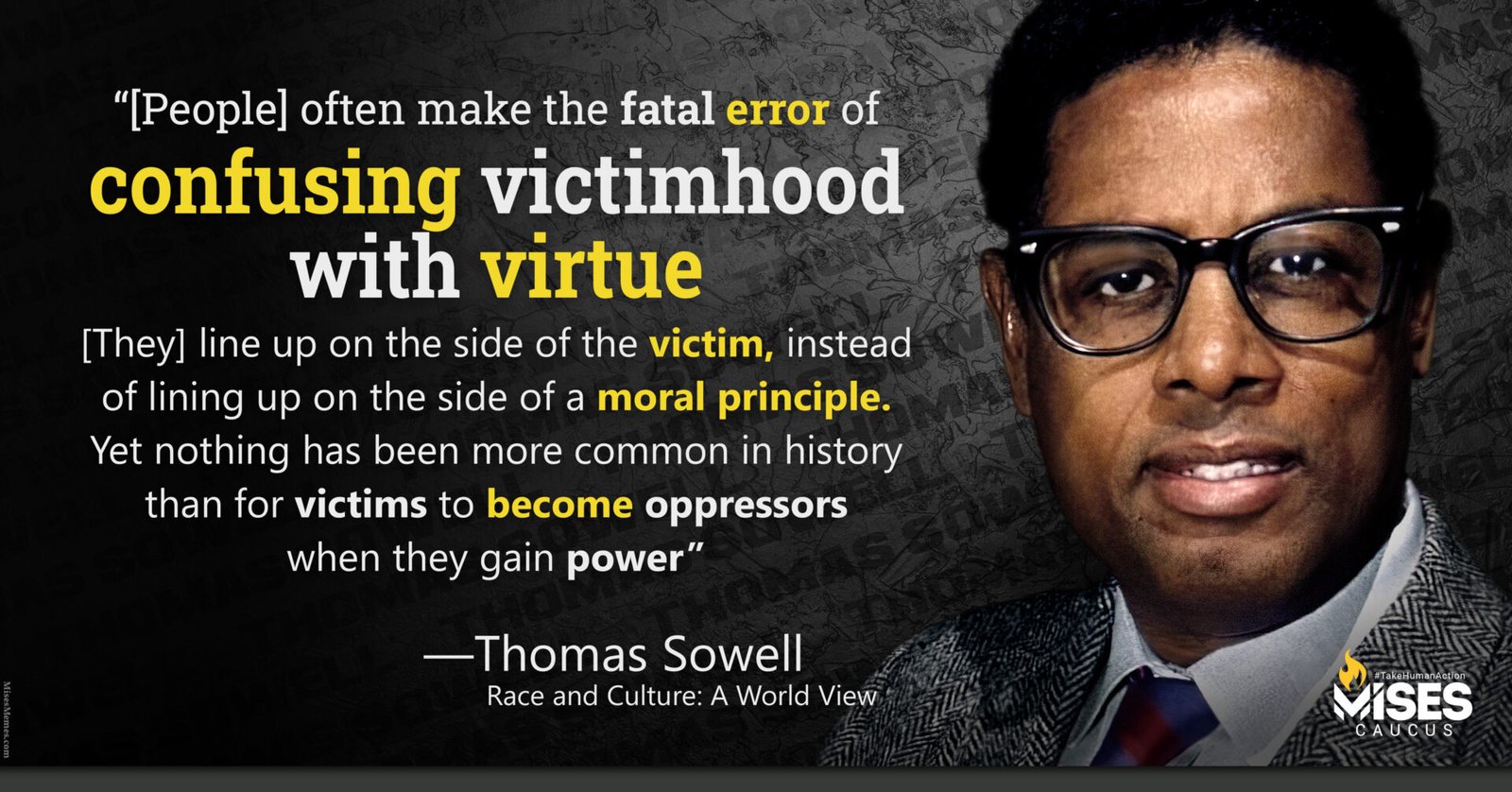
1379: Thomas Sowell – Confusing Victimhood with Virtue

[People] often make the fatal error of confusing victimhood with virtue [They] line up on the side of the victim, instead of lining up on the side of a moral principle. Yet nothing has been more common in history than for victims to become oppressors when they gain power —Thomas Sowell, Race and Culture: A World View
Normal Quality (1920×1005 333 KB)
[People] often make the fatal error of confusing victimhood with virtue [They] line up on the side of the victim, instead of lining up on the side of a moral principle. Yet nothing has been more common in history than for victims to become oppressors when they gain power —Thomas Sowell, Race and Culture: A World View
Normal Quality (1920×1372 466 KB)
[People] often make the fatal error of confusing victimhood with virtue
[They] line up on the side of the victim, instead of lining up on the side of a moral principle. Yet nothing has been more common in history than for victims to become oppressors when they gain power —Thomas Sowell, Race and Culture: A World View

“[People] often make the fatal error of confusing victimhood with virtue
[They] line up on the side of the victim, instead of lining up on the side of a moral principle. Yet nothing has been more common in history than for victims to become oppressors when they gain power” —Thomas Sowell, Race and Culture: A World View
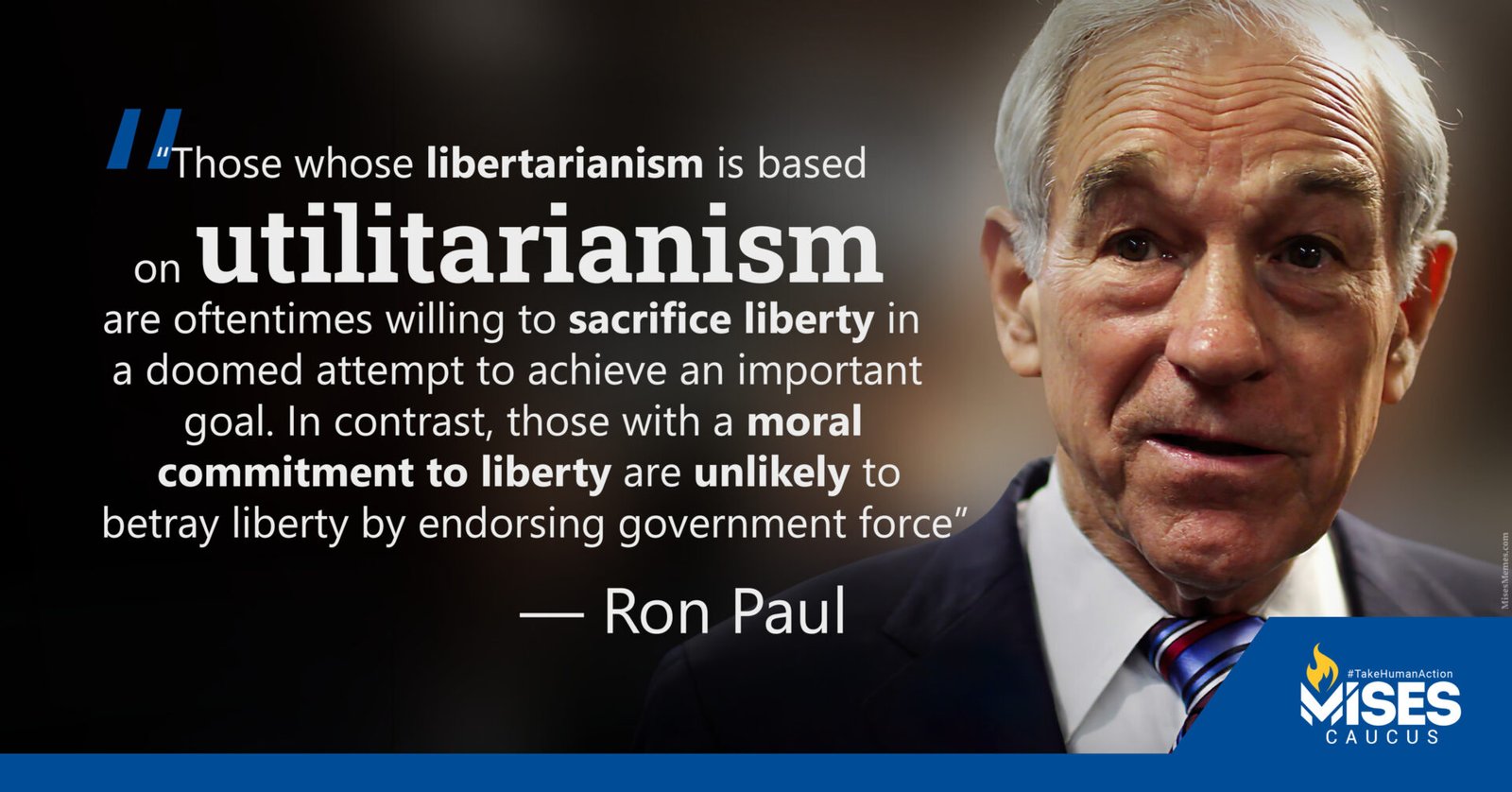
1349: Ron Paul – Moral Commitment to Liberty

Those whose libertarianism is based on utilitarianism are oftentimes willing to sacrifice liberty in a doomed attempt to achieve an important goal. In contrast, those with a moral commitment to liberty are unlikely to betray liberty by endorsing government force. —Ron Paul
Normal Quality (1920×1005 240 KB)
Those whose libertarianism is based on utilitarianism are oftentimes willing to sacrifice liberty in a doomed attempt to achieve an important goal. In contrast, those with a moral commitment to liberty are unlikely to betray liberty by endorsing government force. —Ron Paul
Normal Quality (1920×1372 298 KB)
Those whose libertarianism is based on utilitarianism are oftentimes willing to sacrifice liberty in a doomed attempt to achieve an important goal. In contrast, those with a moral commitment to liberty are unlikely to betray liberty by endorsing government force. —Ron Paul

Those whose libertarianism is based on utilitarianism are oftentimes willing to sacrifice liberty in a doomed attempt to achieve an important goal. In contrast, those with a moral commitment to liberty are unlikely to betray liberty by endorsing government force. —Ron Paul

1336: Ayn Rand – A Guide to Rights

The rights of one man cannot and must not violate the rights of another. For instance: a man has the right to live, but he has no right to take the life of another. He has the right to be free, but no right to enslave another. The very right upon which he acts defines the same right of another man, and serves as a guide to tell him what he may or may not do. —Ayn Rand
Normal Quality (3840×2010 102 KB)
The rights of one man cannot and must not violate the rights of another. For instance: a man has the right to live, but he has no right to take the life of another. He has the right to be free, but no right to enslave another. The very right upon which he acts defines the same right of another man, and serves as a guide to tell him what he may or may not do. —Ayn Rand
Normal Quality (3840×3840 147 KB)
The rights of one man cannot and must not violate the rights of another. For instance: a man has the right to live, but he has no right to take the life of another. He has the right to be free, but no right to enslave another.
The very right upon which he acts defines the same right of another man, and serves as a guide to tell him what he may or may not do. —Ayn Rand

1302: Lysander Spooner – Against the Whole World

A man’s natural rights are his own, against the whole world; and any infringement of them is equally a crime, whether committed by one man, calling himself a robber, or by millions, calling themselves a government. —Lysander Spooner
Normal Quality (3840×2010 85 KB)
A man’s natural rights are his own, against the whole world; and any infringement of them is equally a crime, whether committed by one man, calling himself a robber, or by millions, calling themselves a government. —Lysander Spooner
Normal Quality (3840×3840 125 KB)
A man’s natural rights are his own, against the whole world; and any infringement of them is equally a crime, whether committed by one man, calling himself a robber,  or by millions, calling themselves a government. —Lysander Spooner

A man’s natural rights are his own, against the whole world; and any infringement of them is equally a crime, whether committed by one man, calling himself a robber, or by millions, calling themselves a government. —Lysander Spooner

1296: Walter Williams – False Charity

The act of reaching into one’s own pockets to help a fellow man in need is praiseworthy and laudable. Reaching into someone else’s pocket is despicable. —Walter Williams
Normal Quality (1920×1005 272 KB)
The act of reaching into one’s own pockets to help a fellow man in need is praiseworthy and laudable. Reaching into someone else’s pocket is despicable. —Walter Williams
Normal Quality (1920×1372 367 KB)
The act of reaching into one’s own pockets to help a fellow man in need is praiseworthy and laudable. Reaching into someone else’s pocket is despicable. —Walter Williams

The act of reaching into one’s own pockets to help a fellow man in need is praiseworthy and laudable. Reaching into someone else’s pocket is despicable. —Walter Williams

1292: Frederic Bastiat – The Socialists

We disapprove of state education. Then the socialists say that we are opposed to any education. We object to a state religion. Then the socialists say that we want no religion at all. We object to a state-enforced equality. Then they say that we are against equality. And so on, and so on. It is as if the socialists were to accuse us of not wanting persons to eat because we do not want the state to raise grain. —Frederic Bastiat
Normal Quality (2770×3840 758 KB)

We disapprove of state education. Then the socialists say that we are opposed to any education. We object to a state religion. Then the socialists say that we want no religion at all. We object to a state-enforced equality. Then they say that we are against equality. And so on, and so on. It is as if the socialists were to accuse us of not wanting persons to eat because we do not want the state to raise grain. —Frederic Bastiat

1248: Murray Rothbard – Statists are Really Opposed to Charity

Statists, in fact, are really opposed to charity. They often argue that charity is demeaning and degrading to the recipient, and that he should therefore be taught that the money is rightly his, to be given to him by the government as his due. An act of charity, when given voluntarily, is generally considered temporary and offered with the object of helping a man to help himself. But when the dole is ladled out by the State, it becomes permanent and perpetually degrading, keeping the recipients in a state of subservience. Anyone who considers private charity degrading must logically conclude that State charity is far more so. —Murray Rothbard
Normal Quality (3840×2010 146 KB)
Statists, in fact, are really opposed to charity. They often argue that charity is demeaning and degrading to the recipient, and that he should therefore be taught that the money is rightly his, to be given to him by the government as his due. An act of charity, when given voluntarily, is generally considered temporary and offered with the object of helping a man to help himself. But when the dole is ladled out by the State, it becomes permanent and perpetually degrading, keeping the recipients in a state of subservience. Anyone who considers private charity degrading must logically conclude that State charity is far more so. —Murray Rothbard
Normal Quality (2900×3840 157 KB)

Statists, in fact, are really opposed to charity. They often argue that charity is demeaning and degrading to the recipient, and that he should therefore be taught that the money is rightly his, to be given to him by the government as his due. An act of charity, when given voluntarily, is generally considered temporary and offered with the object of helping a man to help himself. But when the dole is ladled out by the State, it becomes permanent and perpetually degrading, keeping the recipients in a state of subservience. Anyone who considers private charity degrading must logically conclude that State charity is far more so. —Murray Rothbard

1247: Murray Rothbard – Taking Wealth by Force is Not Charity

It is hardly “charity” to take wealth by force and hand it over to someone else. Indeed, this is the direct opposite of charity… Compulsory confiscation can only deaden charitable desires completely, as the wealthier grumble that there is no point in giving to charity when the State has already taken on the task. —Murray Rothbard
Normal Quality (1920×1005 177 KB)
It is hardly “charity” to take wealth by force and hand it over to someone else. Indeed, this is the direct opposite of charity… Compulsory confiscation can only deaden charitable desires completely, as the wealthier grumble that there is no point in giving to charity when the State has already taken on the task. —Murray Rothbard
Normal Quality (1920×1372 225 KB)
It is hardly “charity” to take wealth by force and hand it over to someone else. Indeed, this is the direct opposite of charity… Compulsory confiscation can only deaden charitable desires completely, as the wealthier grumble that there is no point in giving to charity when the State has already taken on the task. —Murray Rothbard

It is hardly “charity” to take wealth by force and hand it over to someone else. Indeed, this is the direct opposite of charity… Compulsory confiscation can only deaden charitable desires completely, as the wealthier grumble that there is no point in giving to charity when the State has already taken on the task. —Murray Rothbard